
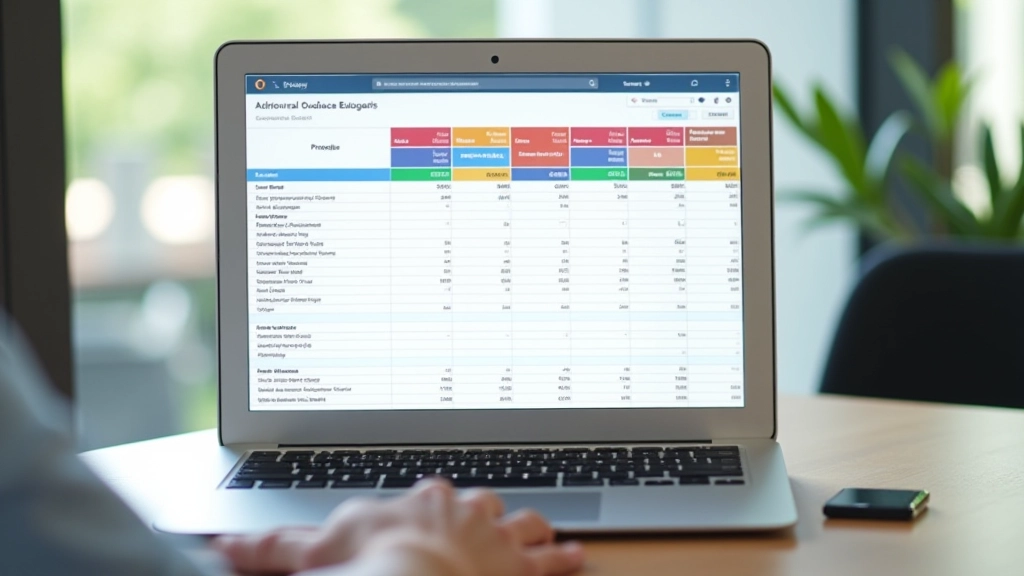
Fixed vs Variable Costs: The Essential Distinction
Learn to separate your necessary monthly expenses from discretionary spending. Understanding this difference transforms how you manage your household budget.
Read ArticleLearn how this practical framework helps Malaysian families track spending, understand their money patterns, and build healthier financial habits from the ground up.

If you’ve ever wondered where your money goes each month, you’re not alone. Most Malaysian families don’t have a clear picture of their spending — and that’s where Belanjawanku comes in. It’s not some complicated financial system or a rigid formula that forces you into a box. Instead, it’s a straightforward way to understand your household expenses and see exactly how your ringgit is being used.
The framework breaks down spending into meaningful categories so you can make smarter decisions. Whether you’re earning RM3,000 a month or RM10,000, the principles stay the same. You’ll learn to separate what you truly need from what you want, and that distinction alone changes everything about how families manage money.

Here’s where Belanjawanku gets practical. The system splits your spending into two main buckets: fixed costs and variable costs. Fixed expenses are the ones that don’t change month to month — your rent or mortgage, insurance premiums, utility bills. These are predictable, and you know exactly how much they’ll be. Most Malaysian families spend around 40-50% of their income on these essentials.
Variable expenses are trickier. They’re the costs that shift depending on your choices — groceries, transportation, dining out, entertainment. This is where most families lose control of their money without realizing it. A small coffee here, a spontaneous meal there, and suddenly you’ve spent an extra RM500 that wasn’t planned. That’s why tracking these matters so much. When you see the numbers actually written down, you notice patterns you’d never catch otherwise.
The goal isn’t to eliminate variable spending. You’re not expected to eat only rice and beans. Instead, you’re making conscious choices about what you spend on, knowing exactly what trade-offs you’re making each month.


Let’s say your household income is RM5,000 per month. You’ll start by listing everything that’s truly fixed. Rent takes RM2,000, utilities are RM300, insurance RM200, loan repayment RM600. That’s RM3,100 in fixed costs — 62% of your income. Now you’ve got RM1,900 left for variable expenses and savings.
Here’s what makes this work: you write it all down. Not just the fixed stuff — everything. Groceries, transportation, phone credits, personal care, unexpected expenses. Track it for two or three months, and you’ll see your real spending patterns emerge. Most people are shocked at what they discover. The snacks alone add up fast.
Then comes the adjustment phase. You’re not cutting everything ruthlessly. Instead, you’re deciding what matters most to you. Maybe eating out twice a week is non-negotiable. That’s fine — budget for it. Maybe you can reduce entertainment costs. The point is you’re making the choices consciously, not by accident.
You’ll actually know where your money goes. No more wondering. No more vague feelings about overspending. The numbers tell the story clearly.
When you understand your spending, you gain control over it. You’re not reacting to your finances anymore — you’re directing them where they matter.
Most families find they can save RM300-500 monthly just by reducing waste once they see where the leaks are. That’s RM3,600-6,000 per year.
When everyone in the household understands the budget, there’s less conflict about money. You’re working toward shared goals, not pulling in different directions.
You don’t need special apps or complicated systems to start. Here’s what actually works for Malaysian families:
Grab a notebook or open a spreadsheet. List every expense for the next 30 days — and I mean everything. Groceries, transport, coffee, medical bills, haircuts, everything. Don’t judge yourself, just record. Most people skip this step thinking they already know, but you don’t. Not really.
After 30 days, sort your expenses into categories. Fixed costs like rent and utilities. Variable costs like food and transport. Personal spending on hobbies and leisure. Once you see them organized, patterns jump out. You’ll notice the categories where you’re spending more than expected.
Use what you learned to plan the coming month. Set realistic targets for each category. Not strict limits that make you miserable, but reasonable targets. If you spent RM800 on groceries, can you aim for RM750? If transport was RM300, is RM280 possible? Small improvements add up significantly over time.

Belanjawanku works because it’s simple and honest. It doesn’t promise to make you rich overnight or eliminate all your expenses. Instead, it gives you clear sight of your money — where it comes from and where it goes. That visibility is the foundation for every good financial decision you’ll make from this point forward.
Most Malaysian families who stick with this framework for three months report feeling more in control of their finances. They’re not stressed about money in the same way. They’re not making impulsive purchases. They’re not avoiding opening bills because they’re scared of what they’ll find. That peace of mind? That’s worth the effort of tracking and planning.
Start small. Track this month. Review what you find. Adjust for next month. That’s it. You don’t need permission, special tools, or perfect circumstances. You just need to start.
Explore more resources about household budgeting and expense management to strengthen your financial foundation.
Browse More GuidesThis guide is for educational purposes only and provides general information about household budgeting frameworks. It’s not financial advice, and it doesn’t replace consultation with a qualified financial advisor. Every household’s situation is unique — your income, expenses, family size, and financial goals are different from others. Use this information as a starting point for understanding your own finances, but adapt the approach to your specific circumstances. If you’re facing serious financial difficulties, consider speaking with a financial counselor or advisor who can assess your complete situation and provide personalized guidance.